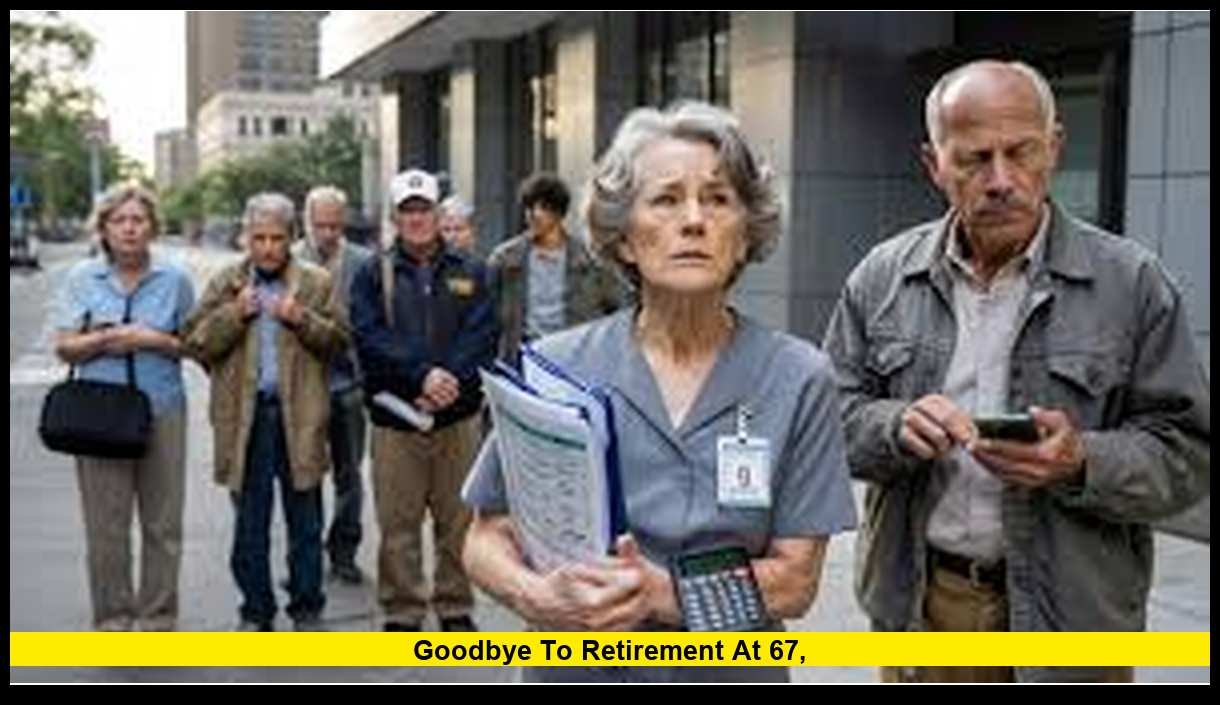
“Goodbye to Retirement at 67” reflects concerns that rising costs and potential changes to Social Security Administration policies may push many Americans to work longer before retiring.
Goodbye to Retirement at 67 is no longer just a headline — it reflects a real shift in how Americans think about Social Security, retirement age, and long-term financial planning. Recent policy discussions, demographic trends, and economic pressures are reshaping expectations around when people can retire and when they claim benefits.
Across the United States, lawmakers, economists, and retirement experts increasingly agree that the traditional retirement milestone is evolving. While 67 remains the official full retirement age (FRA) for many Americans today, proposals, projections, and behavioral changes suggest the future will look very different.
Why the Retirement Age Conversation Is Changing
For decades, retirement at 65 defined American life. Gradually, the Social Security system increased the full retirement age to 67 for those born in 1960 or later.
Now, several forces are pushing the conversation forward:
- Longer life expectancy compared with past generations
- Financial pressure on Social Security trust funds
- Workforce shortages in key industries
- Rising living costs and healthcare expenses
- A shift toward flexible and phased retirement
These factors do not mean retirement disappears. Instead, they signal that fixed retirement ages may become less relevant.
The Current Social Security Retirement Age Explained
Today, Social Security offers multiple claiming ages. Understanding these is essential before discussing future changes.
| Claiming Option | Age | Impact on Benefits |
|---|---|---|
| Early retirement | 62 | Reduced monthly payments |
| Full retirement age | 67 (most workers) | 100% benefits |
| Delayed retirement | Up to 70 | Higher monthly payments |
Many Americans still retire before 67. However, claiming early can permanently reduce benefits by roughly 30%.
Meanwhile, delaying benefits can increase payments by about 8% per year after full retirement age.
Why Experts Say “Goodbye to Retirement at 67” Reflects a Trend — Not a Rule
Importantly, no law has eliminated retirement at 67. But experts describe a shift happening in practice.
Key trends include:
1. Americans Are Working Longer
Labor force participation among older adults continues to rise. Many people work part-time after retirement age.
2. Retirement Is Becoming Flexible
Instead of stopping work suddenly, people transition gradually.
Examples:
- Consulting work
- Freelancing
- Remote part-time roles
- Encore careers
3. Financial Necessity Plays a Major Role
Inflation, housing costs, and healthcare expenses push some workers to delay retirement.
Policy Discussions That Could Reshape Retirement Age
In Washington, policymakers continue debating how to strengthen Social Security’s long-term finances.
Common proposals include:
- Gradually increasing the full retirement age beyond 67
- Adjusting payroll taxes
- Modifying benefit formulas for high earners
- Expanding revenue sources for the program
Raising the retirement age remains one of the most widely discussed — and controversial — ideas.
Supporters argue it reflects longer lifespans. Critics say it effectively cuts benefits.
Social Security Trust Fund Pressure Drives the Debate
A major reason behind the retirement age conversation is the projected strain on Social Security finances.
Key realities frequently cited by analysts:
- The ratio of workers to retirees continues to decline
- Baby boomers are retiring in large numbers
- Benefit payments are growing faster than payroll tax revenue
If no policy changes occur, projections indicate the trust fund may face benefit payment adjustments in the next decade.
This does not mean Social Security disappears. It means policymakers must decide how to maintain long-term stability.
How Americans Are Responding Right Now
Even without new laws, behavior is already shifting.
Recent retirement planning patterns show:
- More people plan to work past 67
- Delayed claiming strategies are increasing
- Hybrid retirement models are growing
- Financial advisors emphasize longevity planning
Younger workers, especially, assume retirement age will be later than previous generations.
Generational Differences in Retirement Expectations
The idea behind Goodbye to Retirement at 67 varies by generation.
Baby Boomers
Many still aim for traditional retirement timelines but increasingly delay claiming benefits.
Generation X
Often balances retirement planning with caregiving responsibilities. Many expect to work longer.
Millennials and Gen Z
Typically assume retirement age will rise. They focus more on flexibility than a fixed number.
The Economic Factors Driving Later Retirement
Several economic realities push retirement timelines later.
Inflation
Higher living costs require larger retirement savings.
Healthcare Costs
Medical expenses remain one of the biggest retirement risks.
Longer Lifespans
Retirement periods can last 25–30 years or more.
Market Volatility
Investment uncertainty affects retirement timing decisions.
Together, these forces make a rigid retirement age less practical.
What Working Longer Means for Benefits
Working beyond full retirement age can have meaningful financial effects.
Potential advantages:
- Higher monthly Social Security payments
- More retirement savings contributions
- Reduced need to withdraw investments early
- Employer health coverage for longer
However, not everyone can work longer due to health or job availability.
This remains a major policy concern.
Industries Most Affected by Later Retirement Trends
Some sectors are seeing stronger impacts.
Examples include:
- Healthcare
- Education
- Professional services
- Government roles
- Skilled trades
Organizations increasingly adapt to older workers through flexible schedules and remote options.
The Psychological Shift Around Retirement
The concept of retirement itself is changing.
Instead of:
“Stop working completely”
Many people now view retirement as:
- Reinvention
- Lifestyle transition
- Financial milestone
- Career evolution
This cultural shift reinforces why the phrase Goodbye to Retirement at 67 resonates widely.
Financial Planning Strategies in the New Retirement Landscape
Experts emphasize several key strategies.
Diversified Income Sources
Relying solely on Social Security is increasingly risky.
Flexible Retirement Timing
Planning multiple retirement scenarios provides security.
Longevity Planning
Savings must cover longer lifespans.
Delayed Claiming Analysis
Many households benefit from waiting beyond full retirement age.
Risks of Raising the Retirement Age
While commonly proposed, raising the retirement age has trade-offs.
Concerns include:
- Physical workers may struggle to work longer
- Lower-income workers rely more heavily on Social Security
- Health disparities affect retirement ability
- Benefit reductions disproportionately affect vulnerable groups
This explains why policy debate remains intense.
Technology’s Role in Later Retirement
Technology enables older workers to stay employed longer.
Examples:
- Remote work platforms
- AI productivity tools
- Online consulting marketplaces
- Flexible gig work
These tools reduce physical barriers to continued employment.
What Experts Predict for the Next Decade
Most analysts agree on several likely outcomes:
- Retirement age debate will continue
- Claiming patterns will shift later
- Flexible retirement will become standard
- Social Security reforms are likely but gradual
A sudden elimination of retirement at 67 remains unlikely. Evolution, not abrupt change, is the dominant expectation.
What This Means for Individuals Today
For workers approaching retirement, the key takeaway is planning flexibility.
Important steps include:
- Understanding your full retirement age
- Running early vs delayed benefit scenarios
- Building additional savings
- Considering part-time retirement options
- Monitoring policy changes
Retirement timing is becoming a personal strategy rather than a fixed rule.
The Broader Impact on the U.S. Economy
Later retirement affects more than individuals.
Potential impacts:
- Larger experienced workforce
- Slower labor shortages
- Changes in hiring practices
- Increased focus on age-inclusive workplaces
- Shifts in pension and benefits design
These structural effects reinforce why the topic receives significant national attention.
Conclusion
The phrase Goodbye to Retirement at 67 captures a powerful shift underway in the United States. While the official full retirement age remains in place, economic realities, demographic change, and policy debates are reshaping how Americans approach retirement.
Instead of a single retirement age, the future points toward flexibility, personalization, and longer workforce participation. For individuals, this means planning for multiple timelines and staying informed about Social Security policy developments.
As this conversation continues to evolve, understanding the changing retirement landscape will be essential. Share your thoughts, experiences, or expectations about retirement age — the discussion is only beginning.
FAQs
1. Has the U.S. officially eliminated retirement at 67?
No. Full retirement age is still 67 for many Americans, but policy discussions and trends suggest future adjustments are possible.
2. Is Social Security running out?
Social Security is not disappearing, but long-term funding challenges may require reforms.
3. Should I delay claiming benefits past 67?
It depends on health, income needs, and life expectancy. Delaying benefits can increase monthly payments.
Disclaimer: This article is for informational purposes only and reflects publicly available information and expert analysis as of February 2026. It does not constitute financial, legal, or tax advice. Readers should consult qualified professionals and official government sources for guidance specific to their individual situation.