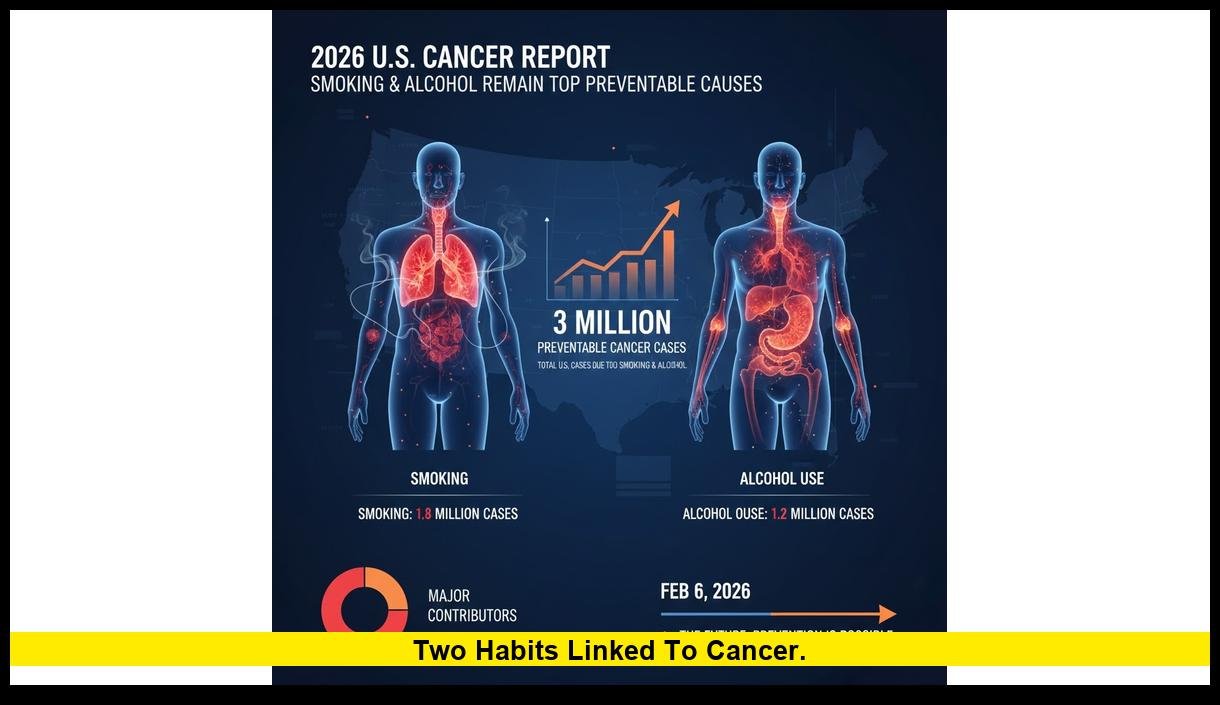
Two habits linked to cancer continue to dominate global and U.S. cancer research findings in 2026, with smoking and alcohol use confirmed as the leading preventable contributors to cancer cases. New large-scale data analyses released over the past year reinforce that these everyday behaviors account for a significant share of cancer diagnoses, despite decades of public health warnings.
Cancer remains one of the leading causes of death in the United States. However, experts emphasize that a substantial portion of cases are tied to behaviors people can change. The most consistent evidence points to tobacco use and alcohol consumption as the most impactful habits driving cancer risk today.
Why These Two Habits Linked to Cancer Matter More Than Ever
Cancer research has advanced rapidly, allowing scientists to identify clear links between lifestyle choices and cancer development. Recent global assessments examining millions of cancer cases across dozens of cancer types found that more than one-third of new cancer diagnoses are associated with modifiable risk factors.
Among all known lifestyle risks, two habits stand out across nearly every population group and age range:
- Tobacco smoking
- Alcohol consumption
These habits affect cancer risk independently, but they also amplify danger when combined.
Smoking: The Leading Preventable Cause of Cancer
Tobacco smoking remains the single most significant preventable cause of cancer in the United States. Cigarette smoke contains thousands of chemicals, many of which damage DNA and disrupt normal cell function. Over time, this damage can lead to uncontrolled cell growth and cancer.
Cancers Strongly Linked to Smoking
Smoking is linked to at least 17 types of cancer, including:
- Lung cancer
- Bladder cancer
- Pancreatic cancer
- Esophageal cancer
- Kidney cancer
- Stomach cancer
- Cervical cancer
- Head and neck cancers
Lung cancer remains the most common and deadliest cancer associated with smoking. Even people who do not smoke can face increased risk through long-term exposure to secondhand smoke.
Despite declining smoking rates in past decades, millions of U.S. adults still use cigarettes, cigars, or other tobacco products. Health experts warn that no form of tobacco use is safe.
Alcohol Consumption and Cancer Risk
Alcohol use is now firmly recognized as a direct cancer risk factor. When alcohol is metabolized in the body, it produces harmful byproducts that can damage DNA and interfere with the body’s ability to repair cells.
How Alcohol Raises Cancer Risk
Alcohol can:
- Damage DNA directly
- Increase inflammation
- Raise hormone levels linked to certain cancers
- Reduce the body’s ability to absorb protective nutrients
- Increase the effects of other carcinogens
Cancers Linked to Alcohol Use
Alcohol consumption increases the risk of several major cancers, including:
- Breast cancer
- Colorectal cancer
- Liver cancer
- Mouth and throat cancers
- Esophageal cancer
Risk rises with both the amount and duration of alcohol use. Long-term heavy drinking carries the highest risk, but research shows that even moderate alcohol consumption contributes to cancer development over time.

The Combined Effect of Smoking and Alcohol
Using tobacco and alcohol together dramatically increases cancer risk. These substances interact in the body, particularly in tissues of the mouth, throat, and esophagus, making cells more vulnerable to damage.
For example:
- People who smoke and drink heavily face much higher rates of head and neck cancers.
- Alcohol increases the absorption of tobacco-related carcinogens.
This combined effect explains why public health experts emphasize addressing both habits simultaneously.
Cancer Risk by Type: A Clear Pattern
Different cancers are influenced by smoking and alcohol in varying degrees. However, for several of the most common cancers in the U.S., these habits play a major role.
| Cancer Type | Smoking Impact | Alcohol Impact |
|---|---|---|
| Lung | Very High | Moderate |
| Liver | High | High |
| Colorectal | Moderate | High |
| Breast | Low to Moderate | High |
| Esophageal | High | High |
| Head and Neck | High | High |
These patterns remain consistent across multiple studies and population groups.
Why Awareness Remains a Challenge
Public awareness of smoking as a cancer risk is widespread. Awareness of alcohol’s role in cancer, however, remains lower. Many Americans still associate alcohol risks primarily with liver disease or addiction, not cancer.
Health officials stress that cancer prevention messaging must clearly communicate that alcohol is a carcinogen and that risk increases with regular use.
Prevention Efforts in the United States
Cancer prevention strategies in the U.S. continue to prioritize reducing tobacco and alcohol use. Key approaches include:
- Smoking cessation programs
- Smoke-free public spaces
- Alcohol use education
- Clear labeling and health warnings
- Early cancer screening programs
Reducing these two habits could prevent hundreds of thousands of cancer cases over time.
What This Means for Individuals
While not all cancers are preventable, reducing exposure to known risk factors can significantly lower overall risk. Public health experts emphasize that addressing the two habits linked to cancer—tobacco use and alcohol consumption—can make a meaningful difference in long-term health outcomes.
Experts consistently recommend:
- Avoiding all tobacco products
- Reducing or eliminating alcohol intake
- Participating in recommended cancer screenings
- Supporting smoke-free and alcohol-aware environments
Small changes can have long-term health benefits, especially when adopted earlier in life.
The Bigger Picture
The continued focus on the two habits linked to cancer reflects a shift toward prevention-based health strategies. As research becomes more precise, the evidence grows stronger that lifestyle choices play a major role in cancer outcomes.
Understanding these risks allows individuals and communities to take informed action and reduce future cancer burden across the United States.
What steps are you taking to protect your long-term health? Share your thoughts below and stay engaged with the latest updates.