The WASHU ACTIVE SHOOTER alert refers to an emergency notification issued at Washington University in St. Louis after reports of a potential armed threat, prompting immediate campus lockdown and police response.
WASHU ACTIVE SHOOTER alerts triggered emergency protocols at Washington University in St. Louis as law enforcement responded to reports of a possible armed threat on campus today, prompting lockdown measures, rapid police deployment, and widespread safety notifications.
Authorities confirmed that emergency alerts were sent across the Washington University campus after reports suggested a potential active shooter situation. Law enforcement agencies moved quickly, securing multiple buildings while officers searched for any immediate threat. Campus officials urged students, faculty, and staff to shelter in place while the situation was assessed.
What Happened: Confirmed Situation Overview
Emergency notifications began circulating after reports of a possible armed individual near campus facilities. The alert system activated standard active shooter protocols designed to protect the university community.
Key confirmed developments:
- Emergency alerts instructed people to shelter in place.
- Police officers responded and established a perimeter.
- Several campus buildings restricted entry and exit.
- Classes and campus activities paused temporarily.
- Students received real-time updates through official safety alerts.
Authorities treated the situation as a potential threat while officers conducted a thorough search.
Officials stressed that early alerts are issued out of caution whenever credible reports suggest danger.
Timeline of Events
A clear timeline helps explain how the situation unfolded.
| Time (Local) | Event |
|---|---|
| Initial alert issued | Campus warned of possible active shooter |
| Minutes later | Police units arrived and secured key areas |
| Shortly after | Shelter-in-place instructions expanded |
| Ongoing | Officers conducted building searches |
| Later update | Officials began assessing threat status |
The timeline reflects a typical rapid emergency response framework used across U.S. universities.
Law Enforcement Response
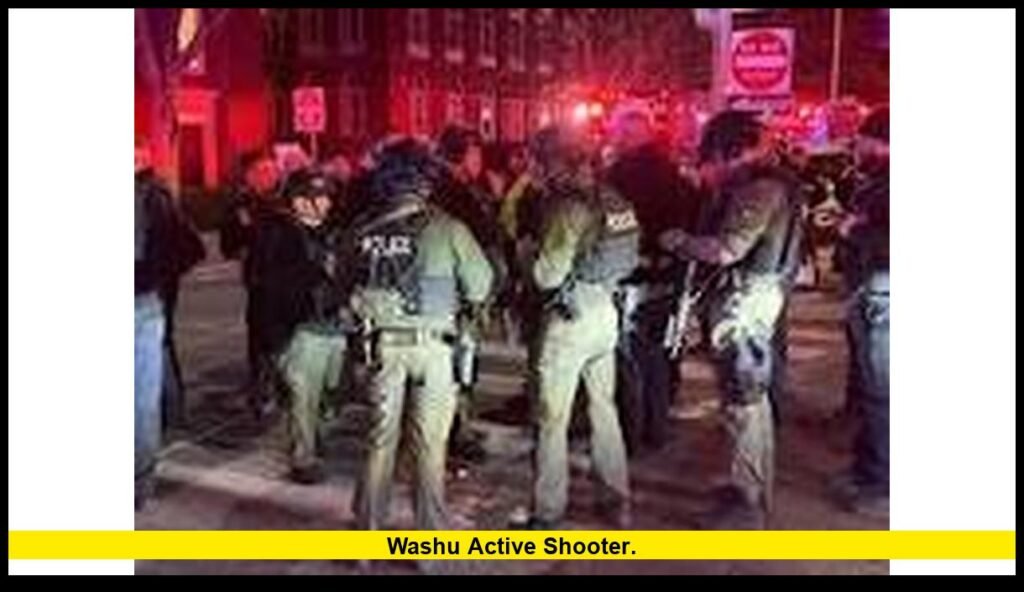
Multiple law enforcement agencies responded immediately. Campus police worked alongside local police departments to secure the area.
Officers used established active shooter response tactics:
- Clearing buildings room by room
- Monitoring entry points
- Coordinating communication with university leadership
- Managing traffic around campus
- Verifying reports from witnesses
Emergency teams prioritized speed and caution. These responses follow national campus safety standards.
University Safety Protocols Activated
Washington University’s emergency system is designed to deliver instant alerts across devices. The system sent text messages, app notifications, and email warnings.
Safety steps communicated to the community included:
- Lock doors and barricade rooms
- Stay away from windows
- Silence phones
- Avoid leaving shelter until official clearance
- Monitor official alerts
These instructions mirror federal active shooter guidance used nationwide.
Student and Faculty Experience
Students reported sudden disruption as alerts arrived. Many classrooms stopped instruction immediately. Faculty members moved students into secured rooms.
Typical reactions across campus included:
- Students sheltering in classrooms
- Residence halls locking down
- Staff coordinating safety checks
- Campus security communicating updates
Situations like this often create uncertainty even when no injuries are confirmed.
University leadership emphasized caution and clear communication during the response.
Current Confirmed Status
Officials later provided updates after officers searched targeted areas. Emergency responders continued verifying reports before declaring the situation safe.
Confirmed status points:
- Police conducted a systematic search.
- Officials prioritized verification before lifting restrictions.
- Safety alerts remained active until threat assessment finished.
- Campus operations experienced temporary disruption.
Authorities reminded the public that many active shooter alerts begin with reports that must be investigated before conclusions are reached.
Why Universities Issue Active Shooter Alerts Quickly
Universities follow a “warn first, verify fast” approach. Rapid alerts allow people to protect themselves immediately.
Reasons for immediate alerts:
- Speed saves lives during real threats.
- Witness reports may indicate danger before confirmation.
- Federal safety guidance encourages early notification.
- Delayed alerts create higher risk.
Campus safety experts widely support early alerts even when threats later prove unfounded.
Impact on Campus Operations
The incident caused short-term operational changes across Washington University.
Immediate impacts included:
- Class interruptions
- Event postponements
- Restricted building access
- Transportation adjustments
- Increased police presence
Universities typically resume normal operations only after full clearance.
Broader Context: Campus Safety Trends in the U.S.
Active shooter alerts on college campuses have increased over the past decade. Many incidents involve reports that require investigation rather than confirmed shootings.
Common factors driving alerts:
- Witness reports of suspicious individuals
- Social media claims
- Emergency calls
- Misidentified objects
- Precautionary safety measures
The increase reflects stronger reporting systems and faster emergency notification technology.
How Emergency Notification Systems Work
Modern campus alert systems integrate several communication channels.
Typical system features:
- Mass text messaging
- App push notifications
- Email alerts
- Sirens or loudspeakers
- Website updates
These systems allow universities to communicate with tens of thousands of people within seconds.
Role of Social Media During the Incident
Students and community members quickly shared updates online. Social platforms often spread information faster than official channels.
However, officials consistently urge caution.
Challenges with social media during emergencies:
- Rumors spread quickly
- Conflicting information appears
- Old incidents resurface
- Panic can increase
Authorities encourage relying on official alerts for accurate guidance.
Mental Health and Community Response
Even precautionary active shooter alerts can create stress across campus communities. Universities often provide support after emergency situations.
Common response steps:
- Counseling availability
- Faculty flexibility for coursework
- Campus communication from leadership
- Safety briefings
- Community forums
These resources help students process anxiety following emergency alerts.
What Happens After an Active Shooter Alert
After officers determine the threat status, universities follow structured recovery steps.
Typical next steps:
- Official all-clear message.
- Review of emergency response.
- Investigation into original report.
- Communication to campus community.
- Safety protocol evaluation.
These reviews help improve future responses.
Investigation Into the Original Report
Authorities usually investigate how the alert began. This process can involve:
- Witness interviews
- Reviewing camera footage
- Checking emergency calls
- Verifying social media claims
- Determining whether a crime occurred
In some cases, alerts stem from misunderstandings rather than confirmed threats.
Campus Security Measures Going Forward
Incidents often lead to renewed focus on safety.
Potential follow-up measures:
- Increased patrols
- Security reviews
- Emergency drills
- Awareness campaigns
- Technology upgrades
Universities continuously adapt safety strategies based on real events.
Public Safety Guidance During Similar Alerts
Experts emphasize clear actions during any active shooter alert.
Recommended steps:
- Shelter immediately
- Lock and barricade doors
- Stay quiet
- Avoid speculation
- Wait for official clearance
Preparedness remains the most effective protection strategy.
Community Reaction
Community members typically react with concern but also support safety precautions. Many recognize the importance of rapid alerts even when threats remain unconfirmed.
Parents, students, and faculty often call for:
- Transparent communication
- Faster updates
- Continued safety investment
- Training and preparedness
These discussions shape future campus policy.
Why Verification Takes Time
Law enforcement must check multiple locations before declaring safety. Officers cannot rely on initial reports alone.
Factors affecting verification time:
- Size of campus
- Number of buildings
- Volume of reports
- Need for coordinated searches
- Ensuring no ongoing risk
Careful verification prevents premature all-clear messages.
Looking Ahead
Situations like the WASHU ACTIVE SHOOTER alert highlight the importance of rapid response systems and coordinated law enforcement action.
Campus leaders continue reviewing procedures while authorities complete the investigation into the original report. Safety remains the top priority as officials work to provide clarity and reassurance to the community.
Universities nationwide monitor these incidents closely because each response informs future emergency planning.
Stay informed and share your thoughts below as the situation continues to develop and new confirmed updates emerge.