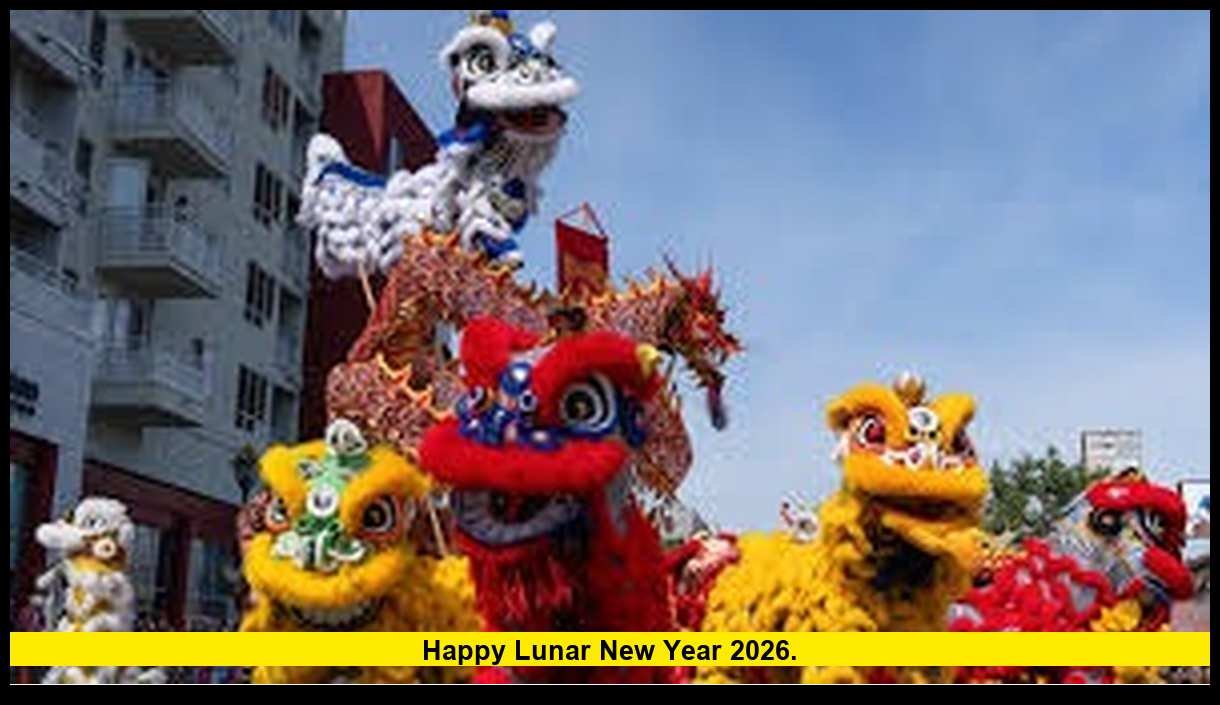
Happy Lunar New Year 2026 marked a major cultural moment across the United States, as communities welcomed the Year of the Horse on Tuesday, February 17, 2026. Celebrations began with the first new moon of the lunar calendar, launching 15 days of traditions, parades, family gatherings, and public festivals that continue through the Lantern Festival on March 3, 2026.
Across major U.S. cities, verified public events, cultural performances, and official recognitions highlighted the growing national presence of Lunar New Year traditions in American life.
What Is Happy Lunar New Year 2026?
Lunar New Year follows the traditional lunisolar calendar, which differs from the Gregorian calendar used in the United States. The holiday begins on the second new moon after the winter solstice, placing the 2026 celebration on February 17.
The festival lasts 15 days and ends with the Lantern Festival. During this period, families reunite, communities host cultural programs, and millions participate in time-honored traditions centered on renewal, prosperity, and good fortune.
In the United States, Lunar New Year is widely observed by Chinese, Vietnamese, Korean, and other East and Southeast Asian communities. The celebration has expanded into mainstream recognition, with schools, city governments, and major institutions acknowledging the holiday.
The Year of the Horse in 2026
Each Lunar New Year corresponds to one of 12 zodiac animals in the Chinese zodiac cycle. In 2026, the zodiac sign is the Horse.
The Horse symbolizes:
- Energy
- Independence
- Strength
- Determination
- Forward movement
The zodiac follows a 12-year cycle, combined with five elements (Wood, Fire, Earth, Metal, Water), creating a 60-year rotation. The 2026 celebration marks the Year of the Fire Horse, a combination that last occurred in 1966.
Culturally, the Horse represents momentum and action. Many communities interpret the symbolism as a year focused on progress and bold decision-making.
Major U.S. Celebrations in 2026
Lunar New Year continues to grow in visibility across American cities. In 2026, large-scale events took place nationwide.
San Francisco
San Francisco remains home to one of the largest Lunar New Year celebrations outside Asia. The annual Chinese New Year Parade is scheduled for March 7, 2026. The parade features elaborate floats, lion and dragon dancers, martial arts groups, and cultural performers.
The city’s Chinatown also hosts street fairs, traditional music performances, and food festivals throughout the holiday period.
New York City
New York City’s Chinatown neighborhoods in Manhattan, Queens, and Brooklyn held parades and community events beginning February 17. Lion dances, firecracker ceremonies, and cultural performances marked the start of the Year of the Horse.
New York State continues to recognize Lunar New Year as a public school holiday in districts with significant Asian American populations.
Philadelphia
Philadelphia’s Chinatown hosted traditional lion dances, cultural shows, and family-friendly programming at museums and community centers. Local businesses reported strong participation in Lunar New Year dining and shopping events.
San Diego
Community organizations in San Diego organized lion dance performances and youth cultural programs. The events emphasized preserving heritage while encouraging younger generations to engage with traditional arts.
Laredo, Texas
Laredo welcomed the Year of the Horse with a public tai chi class and cultural education event, reflecting the growing nationwide awareness of the holiday.
Core Traditions Observed During Happy Lunar New Year 2026
While public celebrations attract attention, family traditions remain central to the holiday.
Family Reunion Dinners
Families gather for large meals on Lunar New Year’s Eve. Certain foods carry symbolic meaning:
- Dumplings represent wealth
- Fish symbolizes surplus and prosperity
- Long noodles signify longevity
- Sticky rice cakes represent growth and progress
These meals reinforce unity and respect across generations.
Red Envelopes
Adults give red envelopes filled with money to children and unmarried younger relatives. The red color symbolizes good luck and protection from negative energy.
Lion and Dragon Dances
Lion dances remain one of the most visible traditions in American celebrations. Performers visit businesses and community spaces to bring blessings and good fortune for the year ahead.
Decorations and Symbolism
Homes and storefronts display red lanterns, paper cuttings, and banners featuring messages of prosperity and happiness. Cleaning before the new year symbolizes sweeping away bad luck, while avoiding cleaning on New Year’s Day prevents good fortune from being swept away.

Growing Recognition in the United States
Lunar New Year continues to gain institutional recognition across the country.
Several states, including New York and California, have formally recognized Lunar New Year as a public school holiday in certain districts. This recognition reflects the growing Asian American population and broader cultural inclusion.
Corporations, sports teams, and national brands also acknowledged the holiday in 2026 through themed events and community outreach efforts.
Public museums and cultural institutions hosted exhibitions and educational workshops focused on zodiac traditions, calligraphy, and lantern-making.
A Rare 2026 Calendar Alignment
An unusual calendar event occurred in 2026. Lunar New Year fell on the same day as Mardi Gras, February 17.
This rare alignment highlighted the cultural diversity of celebrations taking place across the United States on the same date. In cities like New Orleans, dual festivities reflected the nation’s multicultural traditions.
Economic and Community Impact
Lunar New Year significantly boosts local economies, particularly in cities with large Asian American populations.
Restaurants reported increased reservations for reunion dinners and group celebrations. Retailers in Chinatowns across the country experienced heightened sales of traditional decorations, gift items, and festive foods.
Cultural tourism also increased during the holiday period, with visitors attending parades and street festivals.
Community organizations used the occasion to promote cultural awareness and intergenerational engagement.
Why Happy Lunar New Year 2026 Matters in America
Lunar New Year represents more than a holiday. It symbolizes identity, resilience, and cultural continuity.
For many Asian American families, the celebration preserves heritage while connecting younger generations to ancestral traditions.
For broader American audiences, the holiday offers an opportunity to engage with diverse cultures and strengthen community ties.
The visibility of Happy Lunar New Year 2026 across media platforms, city governments, and schools reflects the ongoing integration of multicultural traditions into mainstream American life.
How Americans Participated in 2026
Americans participated in Lunar New Year celebrations in several ways:
- Attending local parades and festivals
- Visiting Chinatown districts
- Trying traditional holiday foods
- Participating in cultural workshops
- Learning about zodiac traditions
Social media platforms featured widespread posts celebrating the Year of the Horse, further amplifying awareness nationwide.
Looking Ahead After Happy Lunar New Year 2026
The 2026 celebration reinforced the growing national embrace of Lunar New Year traditions.
With expanding public recognition, increased participation, and strong community engagement, the holiday continues to shape America’s cultural landscape.
The Year of the Horse now begins its 12-month cycle, carrying forward themes of movement, determination, and renewal.
How are you celebrating the Year of the Horse? Share your experiences and join the conversation as the festivities continue across the country.