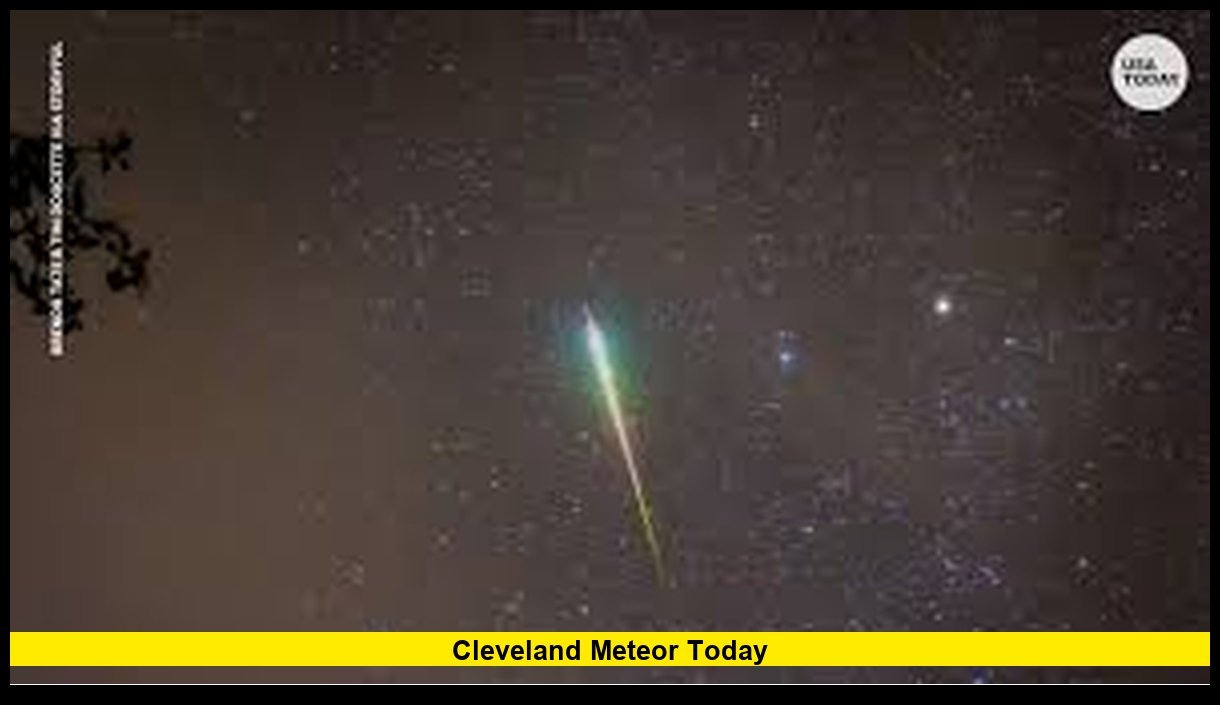
Cleveland meteor today became one of the most talked-about topics across Ohio after multiple residents reported a bright fireball streaking across the night sky, prompting widespread attention on social media and renewed interest in meteor activity over the Midwest.
Reports began emerging earlier today from Cleveland and surrounding areas, with eyewitnesses describing a sudden, intensely bright object moving بسرعة across the sky before fading or fragmenting. Many described a greenish or bluish glow, a common characteristic of certain meteors depending on their composition. As of today, these sightings have been confirmed as a meteor event, not space debris or aircraft activity.
What Happened in Cleveland Today?
Residents across northeastern Ohio reported seeing the meteor during the evening hours. Witnesses described:
- A fast-moving, glowing object crossing the sky
- A bright flash lasting several seconds
- Possible fragmentation before disappearing
- Some reports of a faint rumbling sound moments later
The event was visible across a wide region, not just Cleveland. Reports came in from nearby cities and even parts of neighboring states, suggesting the meteor entered Earth’s atmosphere at a high altitude and traveled a significant distance before burning up.
Astronomical tracking systems and meteor observation networks quickly began analyzing the event. Early confirmations indicate that this was a naturally occurring meteor, often referred to as a “fireball” due to its brightness.
Was It a Meteor or Something Else?
Initial confusion often surrounds events like this. People sometimes mistake meteors for:
- Satellites re-entering the atmosphere
- Military aircraft or flares
- Space debris
- Drones
However, experts have now confirmed that the Cleveland sighting matches the characteristics of a meteor:
- Extremely fast velocity
- Bright, sustained glow
- Short duration
- No controlled flight pattern
Fireballs are larger-than-average meteors that burn brightly as they pass through Earth’s atmosphere. Today’s event fits that classification based on witness descriptions and early observational data.
Why Did the Meteor Appear So Bright?
The brightness of a meteor depends on several factors:
1. Size of the Object
Larger meteoroids create brighter streaks as they burn.
2. Speed of Entry
Objects entering at higher speeds generate more friction and light.
3. Composition
Different minerals produce different colors:
- Green: nickel
- Blue: magnesium
- Orange: sodium
Many Cleveland witnesses specifically mentioned a greenish hue, suggesting the presence of nickel in the object.
Did the Meteor Hit the Ground?
As of now, there is no confirmed evidence that the meteor reached the ground.
Most meteors burn up completely before impact. In rare cases, fragments survive and become meteorites. Authorities and scientific groups have not reported any confirmed impact sites or damage in the Cleveland area today.
That said, if fragments did survive, they would likely have fallen far from the initial sighting point due to the angle of entry and atmospheric drag.
Where Else Was the Meteor Seen?
Although Cleveland became the focal point of the discussion, reports indicate the meteor was visible across:
- Northern Ohio
- Parts of Pennsylvania
- Sections of Michigan
- Possibly areas of Indiana
The wide visibility suggests a high-altitude entry, allowing the fireball to be seen across multiple states.
Public Reaction and Social Media Buzz
Within minutes of the event, social media platforms were flooded with posts, videos, and eyewitness accounts. Many users shared:
- Dashcam footage
- Home security camera clips
- Personal videos of the sky
- Real-time reactions
The phrase “cleveland meteor today” quickly began trending as people tried to understand what they had witnessed.
Common reactions included:
- Surprise and excitement
- Initial fear or confusion
- Curiosity about potential impact
- Comparisons to past meteor events
The rapid spread of footage helped confirm the event quickly, reducing speculation and misinformation.
How Common Are Meteor Events Like This?
While dramatic, events like today’s meteor are not extremely rare.
Here’s a quick breakdown:
| Type of Event | Frequency |
|---|---|
| Small meteors (invisible) | Daily |
| Visible meteors | Several times per week |
| Bright fireballs | A few times per month |
| Meteorite impacts | Rare |
What made the Cleveland meteor stand out was its brightness and the number of witnesses in a populated region.
Is This Related to a Meteor Shower?
Meteor showers occur when Earth passes through debris left by comets. During these periods, meteor activity increases significantly.
However, not all meteors are tied to showers.
Today’s Cleveland meteor appears to be a sporadic meteor, meaning:
- It was not part of a major meteor shower
- It originated from random space debris
- It occurred independently of known annual events
Sporadic fireballs can happen at any time of year.
Could There Be More Sightings Tonight?
Meteor activity is unpredictable, but a single fireball does not necessarily indicate more will follow immediately.
Still, skywatchers often remain alert after such events. Conditions that increase visibility include:
- Clear skies
- Low light pollution
- Late-night viewing hours
Residents in Ohio and nearby states may continue watching the skies tonight, though no surge in activity has been confirmed.
What Should You Do If You See a Meteor?
If you witness a meteor like the one seen in Cleveland today, experts recommend:
- Note the time and direction
- Observe the color and brightness
- Listen for delayed sounds (booms or rumbles)
- Avoid assuming impact without evidence
You can also report sightings to meteor tracking organizations to help scientists analyze the event more accurately.
Are Meteor Events Dangerous?
In most cases, meteors pose no threat to people on the ground.
Here’s why:
- Most burn up completely in the atmosphere
- The Earth’s atmosphere acts as a protective shield
- Large, dangerous impacts are extremely rare
The Cleveland meteor today did not result in any reported injuries or damage, reinforcing how harmless most of these events are.
Historical Context: Similar Events in the U.S.
The United States has seen several notable meteor events over the years:
- Bright fireballs over the Midwest
- Sonic boom-producing meteors
- Rare meteorite recoveries
Events like today’s continue to capture public attention because they combine science, unpredictability, and visual spectacle.
What Experts Are Monitoring Next
Following today’s event, astronomers and monitoring agencies are:
- Reviewing satellite data
- Analyzing trajectory estimates
- Collecting eyewitness reports
- Searching for potential meteorite fragments
More precise details, such as the meteor’s origin and size, may emerge after further analysis.
Why Events Like This Matter
Meteor sightings serve as a reminder of Earth’s place in space. Every day, our planet encounters small pieces of cosmic debris, most of which go unnoticed.
Occasionally, a brighter event like the Cleveland meteor today captures public attention and sparks curiosity about space science.
These moments often inspire:
- Increased interest in astronomy
- Public engagement with science
- Awareness of natural cosmic phenomena
Final Thoughts on the Cleveland Meteor Today
Today’s meteor sighting over Cleveland turned an ordinary evening into a shared moment of awe across multiple states. With clear confirmation that it was a natural fireball event, the focus now shifts from mystery to understanding.
No damage has been reported, and experts continue analyzing the event for more details. For many who witnessed it, the experience will remain unforgettable—a brief but powerful glimpse of the universe in motion.
Did you see the Cleveland meteor today? Share your experience and stay tuned for any new updates as scientists learn more about this rare sky event.