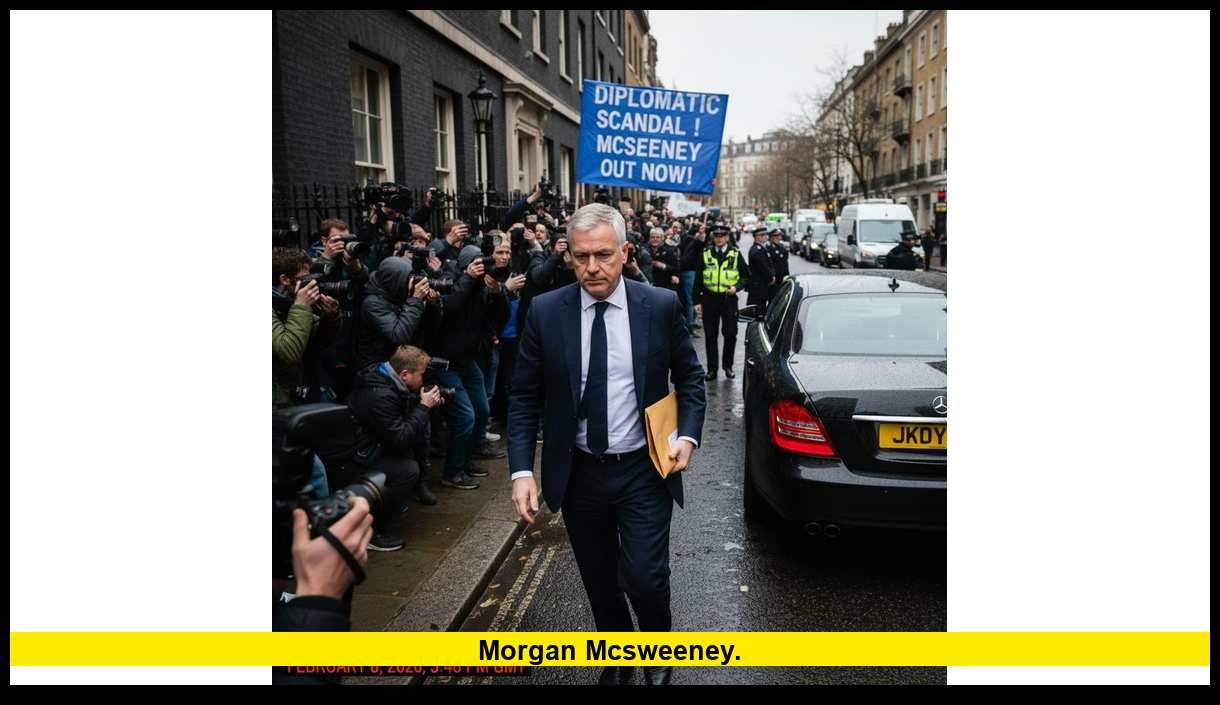
Morgan McSweeney is a senior British political strategist who served as chief of staff to Prime Minister Keir Starmer before resigning in 2026.
Morgan McSweeney, the influential British political strategist and long-time aide to Prime Minister Sir Keir Starmer, resigned as Downing Street chief of staff on February 8, 2026, triggering one of the most significant political moments of Starmer’s premiership. His departure followed mounting controversy over his role in advising the appointment of Lord Peter Mandelson as the United Kingdom’s ambassador to the United States, a decision that sparked intense scrutiny, political backlash, and questions about government vetting procedures.
This article provides a detailed, up-to-date account of Morgan McSweeney’s political career, the circumstances that led to his resignation, and the broader implications for UK leadership and public trust.
Who Is Morgan McSweeney?
Morgan McSweeney was born on April 19, 1977, in Macroom, County Cork, Ireland. Over the past two decades, he has become one of the most influential behind-the-scenes figures in British politics, known for his strategic discipline and strong organizational instincts.
McSweeney built his reputation as a campaign strategist and political operator rather than an elected official. His influence grew steadily through grassroots organizing, party reform efforts, and internal strategy development within the Labour Party.
Early Political Career
McSweeney first gained national prominence through his involvement in Labour Together, a political organization and think tank created to modernize Labour’s electoral strategy after successive defeats. The group focused on voter outreach, message discipline, and reconnecting the party with working-class communities.
His approach emphasized winning elections through clarity, unity, and strategic restraint, rather than ideological purity. That philosophy would later define Labour’s leadership under Sir Keir Starmer.
Role Under Keir Starmer
Morgan McSweeney became chief of staff to Keir Starmer in 2020, shortly after Starmer was elected leader of the Labour Party. At the time, Labour was emerging from internal divisions and electoral setbacks.
McSweeney was widely viewed as one of the central architects of Labour’s transformation from opposition to government. He played a major role in reshaping the party’s internal culture, tightening message control, and focusing relentlessly on voter trust.
Downing Street Appointment
After Labour’s landslide victory in the July 2024 general election, McSweeney was appointed Chief of Staff at 10 Downing Street. The role placed him at the heart of government operations, overseeing policy coordination, political strategy, and senior staffing decisions.
As chief of staff, McSweeney became one of the most powerful unelected figures in British government, with direct access to the prime minister and significant influence over decision-making.
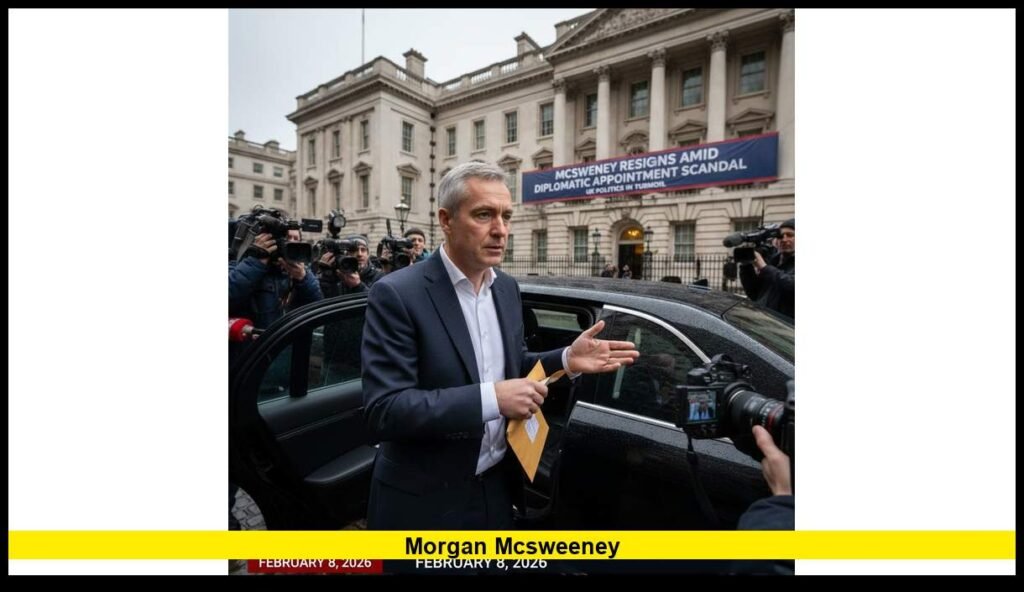
The Appointment That Triggered the Crisis
The controversy that led to Morgan McSweeney’s resignation centered on the appointment of Lord Peter Mandelson as the UK’s ambassador to the United States.
Mandelson, a former senior Labour figure and experienced political operator, was selected for the role in 2024. While the appointment initially drew mixed reactions, scrutiny intensified as new information about Mandelson’s past associations and conduct resurfaced.
Why the Appointment Became Problematic
Concerns emerged over Mandelson’s historical links to the late Jeffrey Epstein and allegations involving the handling of sensitive information. Although some of these issues had been publicly known in earlier years, critics questioned why they had not disqualified him from such a sensitive diplomatic post.
McSweeney had advised Starmer on the appointment and supported Mandelson’s selection, believing his experience and connections would benefit UK-US relations. As criticism mounted, the focus increasingly turned to the decision-making process inside Downing Street.
Public and Political Backlash
The backlash was swift and intense.
Opposition parties accused the government of failing to apply rigorous standards when appointing senior diplomatic figures. Commentators questioned whether political loyalty had been prioritized over judgment and reputational risk.
Within Labour, some MPs expressed concern about the damage to the party’s image, particularly given its emphasis on restoring integrity and trust in public life.
The controversy dominated political discussion, overshadowing policy initiatives and placing sustained pressure on the prime minister’s leadership team.
Morgan McSweeney’s Resignation
On February 8, 2026, Morgan McSweeney announced his resignation as Downing Street chief of staff.
In his resignation statement, McSweeney acknowledged that advising the appointment of Peter Mandelson had been a mistake. He accepted responsibility for the decision and said it had harmed public confidence in government.
Key Points From His Statement
- He described the Mandelson appointment as wrong.
- He accepted full responsibility for his advice.
- He said the decision had damaged trust in politics.
- He stated that stepping aside was the right course of action.
McSweeney also emphasized his pride in the government’s broader achievements but said accountability required him to leave his post.
Reaction From Sir Keir Starmer
Prime Minister Keir Starmer accepted McSweeney’s resignation and thanked him for his service. While stopping short of assigning personal blame publicly, Starmer acknowledged that mistakes had been made in the appointment process.
The prime minister also indicated that government vetting procedures for senior appointments would be reviewed, signaling an effort to restore public confidence.
Despite McSweeney’s departure, questions remain about Starmer’s own role in approving the appointment and whether further political consequences could follow.
Impact on the Labour Government
Morgan McSweeney’s exit represents a significant loss for the Labour government.
He was not only a chief of staff but also a central strategic figure whose influence extended across messaging, policy coordination, and internal discipline. His absence creates a vacuum at the heart of government operations.
Immediate Consequences
- Disruption to Downing Street’s strategic leadership.
- Increased scrutiny of future appointments.
- Internal reassessment of decision-making structures.
Labour now faces the challenge of maintaining stability while navigating ongoing political fallout.
McSweeney’s Broader Political Legacy
Before his resignation, Morgan McSweeney was widely regarded as one of the most effective political strategists of his generation.
Achievements
- Helped transform Labour into a credible governing party.
- Played a key role in the 2024 election victory.
- Strengthened party discipline and message coherence.
Criticism
At the same time, critics argued that McSweeney centralized power too tightly and limited internal debate. Some within Labour felt sidelined by his top-down approach.
The Mandelson controversy has now become a defining chapter in his career, complicating assessments of his long-term legacy.
What Comes Next for Morgan McSweeney?
As of now, McSweeney has not announced his next move. Political observers expect he may take time away from frontline politics.
Possible future paths include:
- Advisory or consultancy roles.
- Work within policy organizations or think tanks.
- A return to politics in a less visible capacity.
Whether he re-enters public life remains an open question.
Wider Implications for UK Politics
The resignation highlights broader issues in British governance, including:
- The importance of robust vetting for senior appointments.
- The risks of political complacency after electoral success.
- The growing public demand for accountability and transparency.
For U.S. audiences, the episode offers insight into how closely intertwined political strategy and diplomatic decisions can be — and how quickly trust can erode when judgment is questioned.
Conclusion
Morgan McSweeney’s resignation marks a turning point in the early years of the Starmer government. Once seen as the mastermind behind Labour’s resurgence, McSweeney now exits amid controversy that underscores the high stakes of political decision-making.
His departure serves as a reminder that influence carries responsibility — and that even the most powerful advisers are ultimately accountable for the outcomes of their advice.
What do you think Morgan McSweeney’s resignation means for the future of UK politics? Join the conversation below and stay engaged as this story continues to develop.