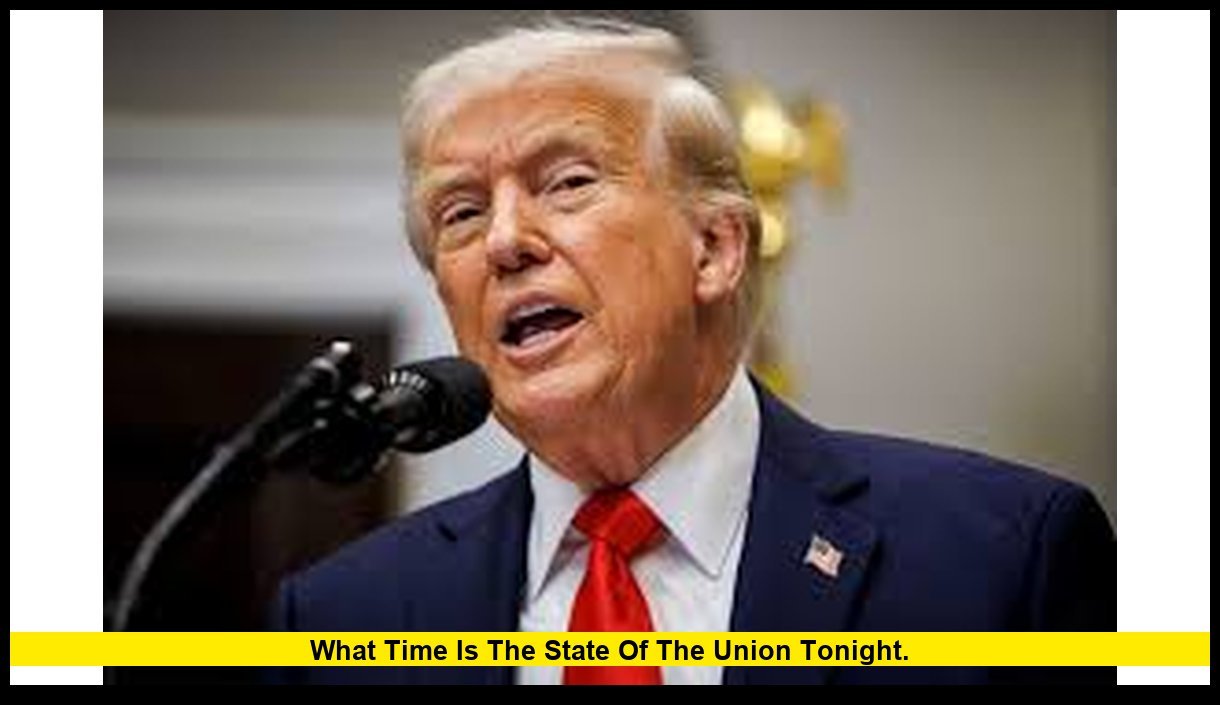
What time is the State of the Union tonight is the key question Americans are asking as Washington prepares for one of the most important political events of the year. The State of the Union address is scheduled to begin at 9:00 p.m. Eastern Time, which means viewers on the West Coast can watch starting at 6:00 p.m. Pacific Time.
The annual address will take place in the U.S. House chamber at the U.S. Capitol, where the president delivers a speech outlining national priorities, economic conditions, foreign policy direction, and legislative goals. The event will be broadcast live across major television networks and streaming platforms, making it widely accessible to the American public.
Confirmed Start Time and Key Details
The State of the Union traditionally starts at 9:00 p.m. ET to maximize national viewership. This timing allows Americans across multiple time zones to watch live.
Start time by time zone:
| Time Zone | Start Time |
|---|---|
| Eastern (ET) | 9:00 p.m. |
| Central (CT) | 8:00 p.m. |
| Mountain (MT) | 7:00 p.m. |
| Pacific (PT) | 6:00 p.m. |
| Alaska (AKT) | 5:00 p.m. |
| Hawaii (HST) | 4:00 p.m. |
Pre-speech coverage typically begins one to two hours earlier, featuring analysis, interviews, and previews.
What the State of the Union Is
The State of the Union is a constitutionally required update in which the president reports on the condition of the country and outlines policy priorities.
While the Constitution requires a report, the modern televised speech has evolved into a major national event that shapes political messaging for the year ahead.
The address usually includes:
- Economic outlook and job growth
- Inflation and cost-of-living issues
- Health care policy
- Immigration and border policy
- National security and foreign affairs
- Legislative priorities for Congress
Where the Speech Happens
The speech takes place in the House chamber at the U.S. Capitol. Members of Congress, Supreme Court justices, Cabinet officials, military leaders, diplomats, and invited guests attend.
One Cabinet member remains away as the designated survivor to ensure government continuity.
The event follows strict ceremonial traditions, including the president’s formal introduction by the Speaker of the House.
How to Watch the State of the Union Tonight
Americans can watch the address through multiple platforms.
TV networks broadcasting live:
- ABC
- CBS
- NBC
- FOX
- PBS
- Cable news networks
Streaming options:
- Network apps and websites
- Official White House livestream
- YouTube live coverage
- Social media live streams
Many outlets provide real-time fact-checks, commentary, and post-speech analysis.
What Typically Happens Before the Speech
The hours leading up to the speech are highly choreographed.
Key pre-event moments include:
- Lawmakers arriving at the Capitol
- Guest announcements from the White House and members of Congress
- Security procedures and chamber preparation
- Media preview coverage
- Political messaging from both parties
Guests often represent policy themes highlighted in the speech.
Major Themes Expected in the Address
State of the Union speeches generally focus on domestic priorities first, followed by global issues.
Core policy areas often include:
Economy
Presidents usually highlight job numbers, wages, business investment, and manufacturing.
Cost of Living
Housing affordability, energy prices, and consumer costs often receive major attention.
Health Care
Prescription drug prices, insurance access, and public health initiatives frequently appear.
Immigration
Border policy and legislative negotiations remain central topics.
Foreign Policy
Conflicts, alliances, and global economic competition are standard components.
Why the Start Time Matters
The 9:00 p.m. ET start time reflects decades of broadcast strategy. Prime-time scheduling ensures:
- Maximum national audience
- Coordinated network coverage
- Immediate political response coverage
- Real-time social media discussion
Viewership typically reaches tens of millions.
Political Responses After the Speech
After the president finishes, the opposition party delivers a formal response. This speech offers a contrasting vision and critique of the administration’s agenda.
Additional reactions follow quickly:
- Congressional statements
- Governor or party leader responses
- Expert commentary
- Market and policy analysis
Digital reactions often shape early public perception.
Historical Context of the State of the Union
The tradition dates back to the earliest days of the United States.
Key milestones include:
- Early written reports instead of speeches
- Modern televised addresses beginning in the 20th century
- Expansion into a major media event
- Increased policy messaging and storytelling
The speech now functions as both a governing update and a political communication strategy.
Security and Logistics
The State of the Union is classified as a National Special Security Event.
That designation involves:
- Extensive law enforcement coordination
- Secret Service leadership
- Restricted Capitol access
- Airspace monitoring
- Emergency preparedness planning
Security planning begins weeks in advance.
How Long the Speech Usually Lasts
Modern State of the Union speeches typically run between 60 and 80 minutes, though length varies.
Factors influencing length include:
- Number of policy proposals
- Economic messaging
- International developments
- Political strategy
Extended applause often adds time.
Why Americans Search “What Time Is the State of the Union Tonight”
Search interest spikes every year as the event approaches. Americans want clear timing so they can watch live.
Common reasons include:
- Following major policy announcements
- Tracking election-year messaging
- Watching political reactions in real time
- Participating in social media discussions
The timing question becomes one of the most searched political queries on speech day.
What Makes This Year’s Address Significant
Each State of the Union reflects the current political environment, economic conditions, and legislative landscape.
Major factors shaping significance typically include:
- Congressional dynamics
- Economic indicators
- Global conflicts
- Domestic policy debates
- Election cycle timing
These elements influence tone, messaging, and proposals.

What Viewers Should Watch For
Key moments often draw attention during the speech.
Important indicators:
- Policy announcements
- Legislative proposals
- Bipartisan appeals
- Foreign policy commitments
- Personal stories from invited guests
- Lines designed to generate headlines
Market reactions and political messaging frequently begin immediately afterward.
Real-Time Engagement and Social Media
Social media plays a major role during the address.
Common trends include:
- Live commentary
- Viral speech moments
- Policy breakdown threads
- Instant political reactions
- Fact-checking discussions
Online engagement has transformed how Americans experience the event.
Impact of the Speech
While the speech does not create law, it often shapes the legislative agenda.
Possible impacts:
- Setting policy priorities
- Influencing negotiations
- Driving public debate
- Shaping campaign narratives
- Affecting approval ratings
The address serves as a roadmap for the months ahead.
Quick Summary
- The State of the Union starts at 9:00 p.m. Eastern / 6:00 p.m. Pacific.
- The speech takes place at the U.S. Capitol before Congress.
- It outlines national priorities and policy goals.
- Americans can watch on major TV networks and streaming platforms.
- Political responses follow immediately afterward.
Final Thoughts
For anyone asking what time is the State of the Union tonight, the confirmed answer is 9:00 p.m. Eastern Time, with live coverage available nationwide across television and digital platforms.
The address remains one of the most closely watched political events each year, offering insight into national direction, policy priorities, and the political climate shaping the United States.
What moments stood out to you during the State of the Union tonight? Share your thoughts and join the conversation below.